
Duplex Steel Vs. 316L: Which Is Better For Your Offshore Project?

Offshore oil and gas projects place exceptional demands on materials. Seawater exposure, salt deposition, cyclic wetting and drying, mechanical loading, elevated temperatures, and restricted maintenance access can accelerate corrosion and increase the consequences of material failure.
For engineers and procurement managers selecting stainless steel pipes, flanges, fittings, and structural components, the decision between duplex steel and 316L stainless steel requires more than a comparison of purchase prices. Corrosion resistance, chloride stress corrosion cracking, structural efficiency, fabrication requirements, and total lifecycle cost must all be evaluated against the project’s service conditions.
In most demanding offshore applications: particularly seawater splash zones and components exposed to sustained tensile stress: duplex stainless steel, especially 2205, provides a stronger and more corrosion-resistant solution than 316L. However, 316L remains appropriate for selected low-stress and less aggressive environments when properly specified.
Understanding the Offshore Service Environment
Offshore equipment operates in several distinct exposure zones:
- Atmospheric marine zones
- Seawater splash zones
- Tidal and intermittent immersion zones
- Fully submerged subsea environments
- Internal piping systems carrying seawater, brine, hydrocarbons, or process fluids
The splash zone is often among the most aggressive. Repeated wetting and drying allows seawater to evaporate on the metal surface, concentrating chlorides and creating deposits in crevices, weld areas, bolted connections, and supports. Oxygen availability, temperature variation, mechanical stress, and limited inspection access further increase the risk.
Although 316L contains molybdenum and offers better corrosion resistance than 304L, it remains an austenitic stainless steel and is susceptible to chloride-induced stress corrosion cracking under suitable combinations of stress, temperature, chloride concentration, and evaporation.
Duplex Steel vs. 316L: Key Differences
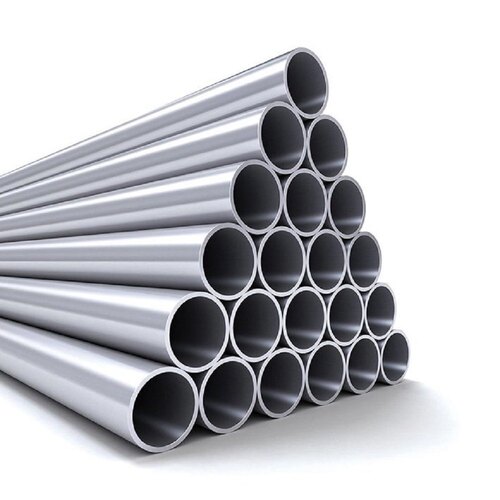
Duplex stainless steel contains a balanced combination of austenitic and ferritic phases. This dual-phase microstructure gives common grades such as 2205 a valuable combination of corrosion resistance, strength, and toughness.
| Property | 316L Stainless Steel | Duplex 2205 Stainless Steel |
|---|---|---|
| Metallurgical structure | Austenitic | Austenitic-ferritic |
| Typical minimum yield strength | Approximately 170–205 MPa | Approximately 450 MPa |
| Typical PREN range | Approximately 24–26 | Approximately 32–35 |
| Chloride SCC resistance | Susceptible under severe conditions | Significantly better resistance |
| Seawater pitting resistance | Limited in stagnant or crevice-prone exposure | Better suited to many seawater services |
| Relative material cost | Lower initial cost | Higher initial cost |
| Weight-reduction potential | Limited | Strong potential through down-gauging |
Actual values depend on the governing specification, product form, heat treatment, thickness, and design code. Nevertheless, the engineering distinction is clear: duplex 2205 generally offers approximately twice the yield strength of 316L while providing a greater margin against chloride-related corrosion mechanisms.
Corrosion Resistance in Seawater and Splash Zones
316L performs well in many atmospheric, process, and general industrial applications. Its chromium content supports passivation, while molybdenum improves resistance to localized corrosion compared with standard 304 grades.
However, natural seawater contains a high concentration of chlorides. In stagnant conditions, narrow crevices, deposits, or poorly drained areas, 316L may experience pitting and crevice corrosion. The risk becomes more pronounced when the surface undergoes repeated evaporation and salt concentration, as commonly occurs in splash zones.
Duplex 2205 typically provides a higher pitting resistance equivalent number, or PREN, because of its chromium, molybdenum, and nitrogen content. A higher PREN does not guarantee immunity from corrosion, but it indicates a stronger resistance to chloride-induced localized attack when comparing suitable grades under similar conditions.
For offshore applications, duplex stainless steel is therefore frequently preferred for:
- Seawater piping and cooling-water systems
- Splash-zone supports and brackets
- Riser clamps and structural attachments
- Desalination and brine-handling equipment
- Offshore platform piping and process components
- Subsea components requiring enhanced corrosion resistance
- Flanges and fittings exposed to marine conditions
Our range of duplex and super duplex pipes is designed for industries requiring high-performance materials for corrosive service environments.
Chloride Stress Corrosion Cracking: The Critical Distinction
Chloride stress corrosion cracking occurs when three conditions act together:
- A susceptible material
- Tensile stress, including residual welding stress
- A chloride-bearing environment
Austenitic grades such as 316L are more susceptible to chloride SCC than duplex grades. The Nickel Institute guidance published by the Stainless Steel Information Center identifies 316L as susceptible to chloride SCC, while duplex stainless steels demonstrate substantially improved resistance.
This distinction is particularly important offshore because salt deposits can concentrate during evaporation. The local chloride level at a wet-dry interface may be considerably higher than the chloride content of the original seawater. Heat from sunlight, process equipment, or adjacent systems can further increase susceptibility.
Duplex steel is not immune to SCC. Severe oxidizing conditions, high temperatures, highly concentrated chlorides, poor welding practice, and unsuitable stress conditions can still create risks. The Stainless Steel World technical review of duplex stainless steels and chloride SCC emphasizes that duplex selection must be supported by service-specific engineering and qualified fabrication procedures.
Engineering Note
Material selection should consider the complete exposure profile rather than relying on grade names alone. Temperature, chloride concentration, pH, oxygen level, hydrogen sulfide exposure, weld condition, crevice geometry, and inspection strategy all influence the final decision.
Higher Yield Strength and Lighter Wall Sections
Offshore projects continuously seek weight reduction. Every kilogram removed from topside structures, supports, piping systems, and subsea assemblies can contribute to lower transportation, installation, structural, and operating costs.
Duplex 2205 has a substantially higher yield strength than 316L. Subject to the applicable design code and operating conditions, this strength advantage may permit:
- Reduced pipe wall thickness
- Lighter supports and brackets
- Lower structural steel tonnage
- Smaller connection components
- Reduced lifting and installation loads
- Improved weight efficiency in compact offshore designs
Down-gauging must never be performed solely on the basis of yield strength. Pressure design, corrosion allowance, fatigue, buckling, erosion, manufacturing tolerances, welding, hydrostatic testing, and minimum code thickness must all be checked. Nevertheless, duplex steel can provide a compelling structural advantage where weight is a critical design constraint.
The FHWA technical report on stainless steel stress corrosion cracking also reports that duplex grades such as 2205 offer higher design strength and can permit lighter construction compared with austenitic stainless steels.
Lifecycle Cost: Initial Price Is Only One Factor
316L usually has a lower purchase price and is often easier to source, form, and fabricate. This can make it attractive for projects focused on minimum initial expenditure.
Duplex steel generally carries a higher price per kilogram. However, the material cost must be evaluated alongside the complete cost of ownership:
- Required material quantity
- Wall thickness and total weight
- Fabrication and welding controls
- Coating or corrosion protection requirements
- Inspection and maintenance frequency
- Replacement and repair costs
- Offshore access and vessel costs
- Production downtime
- Consequences of leakage or structural failure
- Expected service life
For an easily accessible, low-stress component in a mild atmospheric environment, 316L may offer the most economical solution. For a seawater splash-zone component that is difficult to inspect or replace, the cost calculation changes significantly. A single corrosion-related repair campaign can exceed the original material-price difference many times over.
Duplex steel often produces superior lifecycle economics when the project requires long service life, high reliability, reduced maintenance, and resistance to pitting or chloride SCC. Its lower nickel content may also reduce exposure to nickel price volatility, improving procurement predictability.
When Should Offshore Engineers Choose Duplex Steel?
Duplex steel should generally be favored when the component is exposed to:
- Direct seawater or concentrated chloride deposits
- Splash-zone or tidal-zone conditions
- Sustained or cyclic tensile stress
- Welded connections with demanding service requirements
- Difficult inspection or replacement access
- Weight-sensitive structural or piping designs
- Long project lifecycles and high downtime consequences
- Seawater, brine, or cooling-water service
316L may remain appropriate when:
- Exposure is primarily atmospheric and well-drained
- Temperatures remain comfortably below relevant SCC thresholds
- Tensile stress and residual stress are limited
- Crevices and salt deposits can be controlled
- Components are non-critical and readily replaceable
- The design has been validated through applicable standards and corrosion assessment
Procurement and Fabrication Considerations
Choosing the correct grade is only the first step. Offshore procurement teams should also verify:
- Applicable ASTM, ASME, EN, or project specifications
- UNS designation and grade, such as S31603 or S32205
- Heat-treatment condition
- Chemical and mechanical test certificates
- Positive material identification requirements
- Ultrasonic, radiographic, or other non-destructive testing
- Welding procedure qualification
- Ferrite balance requirements for duplex welds
- Surface finish and pickling or passivation requirements
- Dimensional tolerances and traceability
- Compatibility of pipes, flanges, fittings, fasteners, and valves
Material compatibility across the complete assembly is essential. Selecting duplex pipes while using unsuitable 316L flanges, fasteners, or weld consumables can create galvanic, fabrication, or performance concerns.
Hindco Steel And Alloys supplies stainless steel pipes, duplex and super duplex flanges, fittings, sheets, plates, and other industrial metal products in a broad range of grades and specifications. Our products are supported by stringent quality controls, recognized testing, and global supply capabilities.

Final Verdict
For demanding offshore projects involving seawater, splash zones, chloride deposits, tensile stress, and difficult maintenance access, duplex steel: particularly 2205: is generally the stronger engineering choice over 316L.
Its higher yield strength can enable lighter wall sections and more weight-efficient designs. Its dual-phase microstructure provides significantly improved resistance to chloride stress corrosion cracking, while its higher PREN supports better performance against pitting and crevice corrosion in many seawater environments.
316L remains a dependable and cost-effective material for suitable low-stress applications, but its lower initial cost should not be treated as evidence of lower total cost. For offshore platforms and subsea infrastructure, the correct benchmark is long-term reliability, compliance, maintainability, and total lifecycle value.
When project conditions are severe, specifying duplex steel at the outset can deliver the enduring performance and operational assurance that offshore assets require.
